
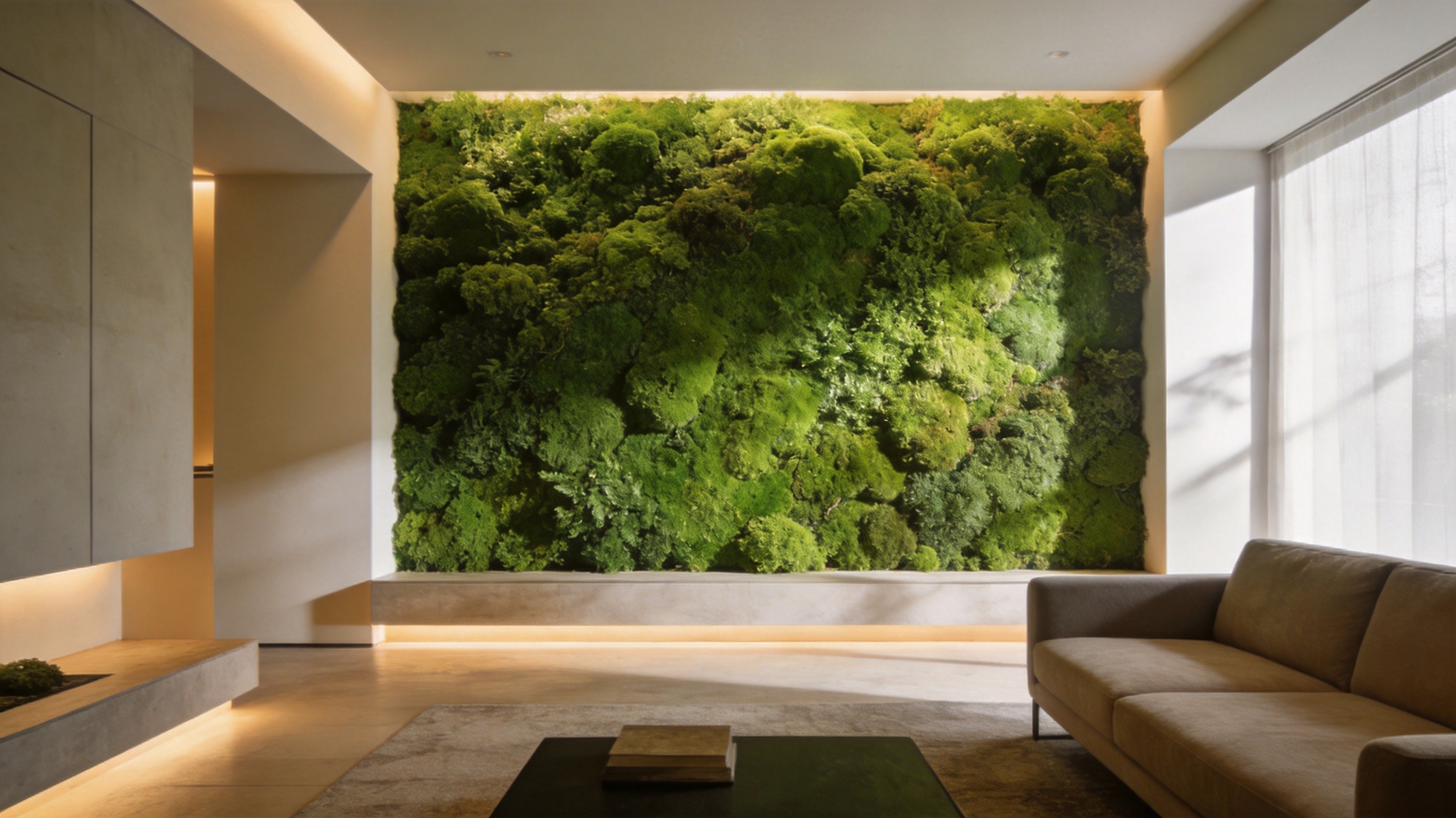
In urban living, having a lush green wall is no longer a luxury. Indoor moss walls are becoming a popular choice in modern interior design thanks to their unique aesthetic value and low-maintenance nature.
What Is a Moss Wall?
A moss wall is a form of vertical greening where specially treated natural moss is fixed onto a wall structure. Unlike traditional living walls, moss walls typically do not require complex irrigation systems, as moss itself has exceptional water retention capabilities.
Key Advantages of Moss Walls
1. Extremely Low Maintenance
Moss walls do not require frequent watering. In most cases, a light misting once a week is sufficient to keep them in good condition. This is thanks to the natural water retention of moss, making it a low-effort green solution.
2. Excellent Sound Absorption
Studies show that moss walls effectively absorb indoor noise, reduce echo, and improve spatial comfort. This makes them particularly suitable for offices and meeting rooms that require a quiet environment.
3. Natural Air Purification
Moss can absorb harmful substances like formaldehyde and benzene from the air while releasing oxygen, improving indoor air quality naturally.
4. Unique Visual Aesthetics
The natural texture and color gradations of moss create a serene, nature-inspired atmosphere. The varying shades of green add a distinctive artistic touch to any space.
Design Considerations
Lighting Requirements
Most indoor moss varieties prefer shade and should be placed away from direct sunlight. A spot near a window with indirect light is ideal.
Humidity Control
Maintaining moderate air humidity is crucial for moss wall health. During dry seasons, a humidifier can help maintain 50-70% relative humidity.
Ventilation
Good air circulation prevents mold growth, but avoid placing moss walls in direct drafts. Moderate, gentle ventilation works best.
Application Scenarios
Commercial Spaces
Company reception areas, hotel lobbies, and shopping center atriums — moss walls elevate spatial quality and serve as a natural backdrop for brand identity.
Residential Interiors
Entryways, living room feature walls, and studies — moss walls become eye-catching focal points that bring a touch of nature indoors.
Office Environments
Meeting rooms and relaxation areas benefit from moss walls, which help reduce stress, improve focus, and create healthier work environments.
Maintenance Tips
- Mist the moss surface with a fine spray once a week — keep moist but avoid waterlogging
- If areas turn yellowish, increase misting frequency slightly
- Avoid installing moss walls near HVAC vents or radiators
- Periodically check the mounting structure to ensure the moss layer remains secure
From Moss Wall to Living Wall
While preserved moss walls offer beauty with minimal upkeep, those seeking a truly living, breathing green wall can explore Xponge® soilless substrate technology. Xponge® enables full living walls with real, growing plants — still lightweight, still low-maintenance, but alive and evolving.